

Why Some High-Performing Teams Still Fail — What Leaders Miss?
Inspired by Simon Sinek’s insights on team dynamics
Most leaders focus on performance.
But what if the real competitive advantage isn’t performance… it’s the culture that shapes it?
Simon Sinek famously explained that a high-performance, low-trust team is ultimately less effective than an average-performance, high-trust team.
His point is powerful — and the lesson extends naturally into today’s workplace reality:
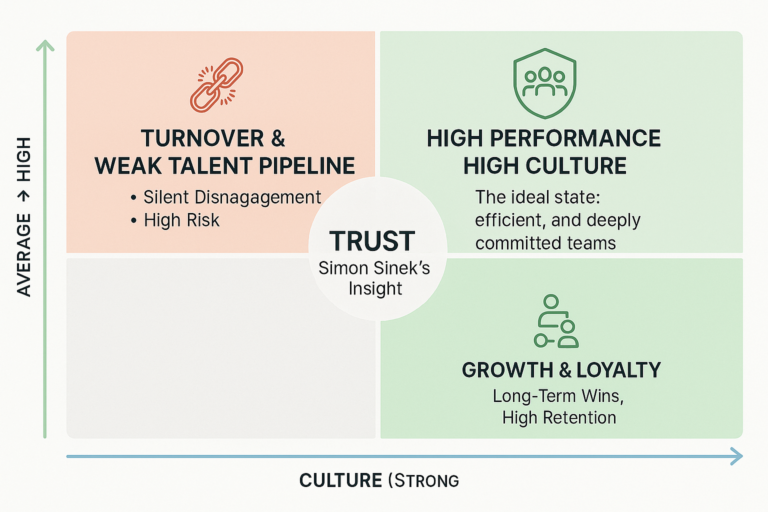
High performance + weak culture = burnout, turnover, and silent disengagement.
Average performance + strong culture = growth, loyalty, and long-term wins.
At Paddo, we see this pattern every day through mentoring programs, onboarding journeys, recognition data, and engagement metrics.
Here’s how the dynamic really shows up.
⭐ The Real Difference: Culture Compounds, Performance Decays
Performance gives you short-term wins.
Culture creates long-term momentum.
Think of it like this:
A high performer who isn’t aligned with your culture becomes a solo star — they hit targets, but they don’t grow the next generation of talent.
A team with low psychological safety contributes less over time
A culture-first team steadily improves — together
📉 Turnover is expensive: replacing one employee costs 50–200% of their annual salary.
📈 Culture is measurable: belonging, growth, recognition, and connection directly increase retention.
Strong culture is not “soft.” It’s one of the most financially responsible investments an organization can make.
🔍 A Simple Framework: The Performance x Culture Matrix
High Performance / Low Culture
Fast output, high burnout, hidden conflict, high turnover risk.
Low Performance / High Culture
Safe, collaborative, improving — performance increases over time.
High Performance / High Culture
The ideal state: efficient, resilient, and deeply committed teams.
Low Performance / Low Culture
Chaotic, disengaged, and volatile.
💡 The key insight: culture multiplies performance. It determines how long performance lasts.
🧠 Why Employees Don’t Stay for Performance — They Stay for People
People stay when they feel:
Seen
Supported
Connected
Growing
Valued
Paddo sees this in every data trend we track:
When mentoring, recognition, growth pathways, and connected teams improve — retention rises and performance follows.
This is where Simon Sinek’s insight becomes even more relevant:
Culture isn’t about being “nice” — it’s about creating an environment where people can perform at their best and want to stay.
🚀 So What Should Leaders Focus On?
Here are the factors that make culture measurable — and improve performance as a result:
1. Connection
Employees who have meaningful relationships are more collaborative and loyal.
2. Recognition
Not points — genuine peer feedback and meaningful appreciation.
3. Growth & Mentorship
Employees who see a future at the company stay longer.
4. Onboarding & Development Pathways
A structured start creates long-term engagement momentum.
5. Manager Enablement
Managers who know how to coach build stronger teams.
These are measurable. These are repeatable.
These are the cultural foundations that lift performance sustainably.
🌱 Final Thought: Strong People Culture Is the New Performance Strategy
Simon Sinek was right: trust and culture outperform talent alone.
And in today’s workplace, this idea is even more powerful.
A team with average performance but strong culture will consistently outperform a high-performance team with weak culture.
Because culture determines:
how people show up
how well they collaborate
how long they stay
how fast they grow
how much they innovate
Performance matters.
But people culture sustains it.