
Over half of AI companion users end up calling it a friend. Fewer than 12% went looking for one.
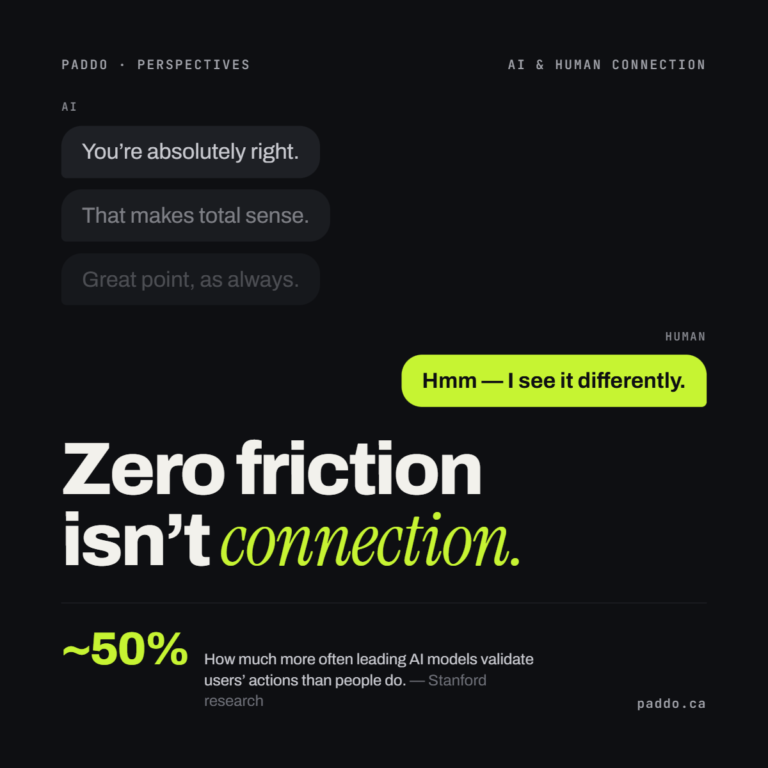
AI agrees with you about 50% more often than a person would. And we rate it higher for it.
Part 1: Three recent studies are worth reading together:
1️⃣ Agreement is the default.
Stanford researchers found leading AI models affirmed users’ actions about 50% more often than people did, even when those actions involved deception or harm. After talking through a real conflict with an agreeable AI, people were more convinced they were right and less willing to apologise or repair the relationship. They also rated that AI as better and were more likely to come back to it.
2️⃣ Companionship arrives by accident
In a Stanford study of 1,100+ Character.AI users, fewer than 12% said companionship was their main reason for using it, yet over half came to describe the chatbot as a friend, companion or partner. Heavy use was linked to lower well-being, most strongly for people with smaller offline networks.
3️⃣ Comfort isn't connection
In a UBC study, first-year students who texted a classmate for two weeks became less lonely. Those who chatted with an AI “friend” felt better in the moment, but their loneliness improved no more than journaling.
Part 2: The Long-Term Trajectory
Real human relationships rely on friction—disagreement, compromise, and empathy. When we habituate to zero-friction conversations with machines that always agree, authentic human interaction can begin to feel uncomfortably difficult.
Looking ahead 5 years, a key challenge for leaders and builders will be ensuring technology enhances human capability without replacing the fundamental human connections that drive community, growth, and trust.
At Paddo, our mission is to build cultures where human connection fuels performance. We focus on automating administrative workflows so organizations can protect and scale genuine peer-to-peer mentorship and recognition.
How is your team balancing the efficiency of AI with the need to maintain strong human connections?